The Role of Land Transportation in Modern Logistics and Cargo Services
Every successful delivery has a story that begins long before a shipment reaches its destination. A container may arrive at a busy seaport after weeks at sea, or a high-value shipment may land at an international airport within hours. But regardless of how goods enter a country, there is one stage of the journey that ultimately determines whether they reach warehouses, retail stores, construction sites, or customers on time—land transportation.
It’s often the least talked about part of the supply chain, yet it plays one of the biggest roles in keeping businesses running. Without an efficient road transport network, cargo simply cannot complete its journey. Products remain at ports, warehouses cannot replenish inventory, and customers face unnecessary delays.
This is why Logistics and Cargo Services depend so heavily on reliable land transportation. It connects every stage of the supply chain, giving businesses the flexibility to move goods quickly, efficiently, and with greater control over delivery schedules.
For companies operating in the UAE, road transportation has become even more valuable. The country has earned its reputation as one of the world’s leading trade and logistics hubs, supported by modern highways, advanced logistics parks, free zones, and seamless links to regional markets. Every day, thousands of trucks move cargo between ports, airports, industrial zones, warehouses, and neighboring GCC countries, helping businesses maintain steady operations in an increasingly competitive marketplace.
More Than Moving Cargo from One Place to Another
When people think about logistics, large cargo ships and aircraft often come to mind first. In reality, those transport modes are only one part of a much larger logistics network.
Take a shipment arriving at Jebel Ali Port as an example. Once customs clearance is completed, the cargo doesn’t magically appear at a retailer’s warehouse or a manufacturing facility. It still needs to be transported inland, often across several cities or even across international borders into neighboring GCC countries.
That responsibility falls to road transportation.
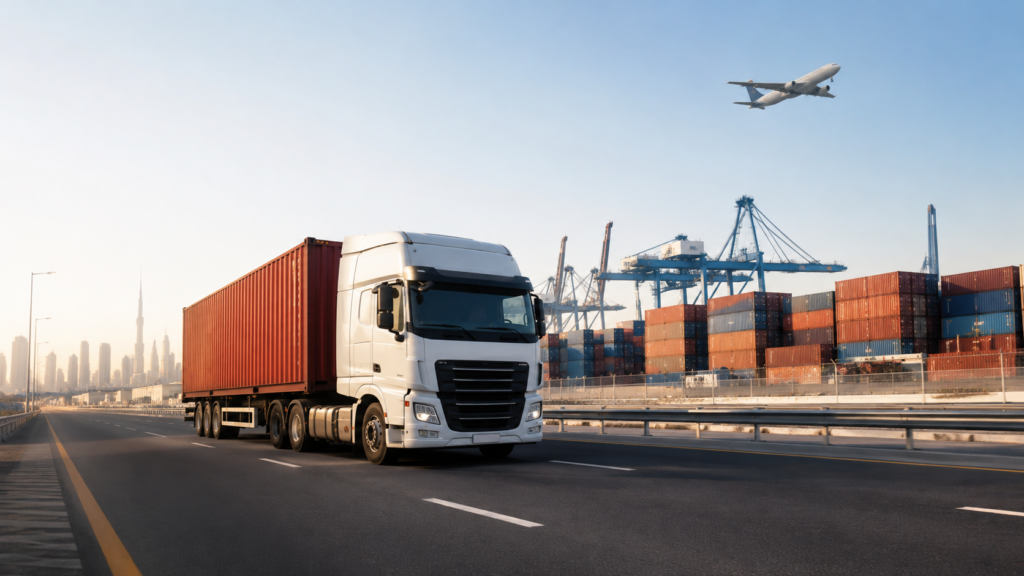
Whether the shipment consists of consumer goods, industrial equipment, pharmaceutical products, construction materials, or temperature-sensitive food, trucks perform the critical task of connecting every stage of the journey. This ability to provide true door-to-door transportation makes road freight one of the most essential components of modern Logistics and Cargo Services.
Unlike sea or air freight, road transportation offers businesses far greater flexibility. Vehicles can be dispatched according to demand, routes can be adjusted when conditions change, and deliveries can reach locations that other transport modes simply cannot access.
For businesses that rely on consistent inventory movement or time-sensitive deliveries, that flexibility is often the difference between meeting customer expectations and missing important deadlines.
Why Land Transportation Remains Essential in the UAE
The UAE’s position between Asia, Europe, and Africa has transformed it into one of the busiest logistics gateways in the world. However, its success is not built solely on world-class ports and airports. An equally important factor is the country’s extensive road infrastructure, which allows cargo to move efficiently across all seven emirates and into neighboring GCC markets.
Every shipment arriving through Jebel Ali Port, Khalifa Port, or Dubai International Airport depends on road freight to continue its journey. Goods destined for supermarkets, retail stores, manufacturing plants, healthcare facilities, and construction projects all rely on efficient inland transportation before reaching their final destination.
This network also plays a major role in supporting regional trade. Cross-border road freight has become increasingly important for businesses shipping products to Saudi Arabia, Oman, Bahrain, and other GCC countries. Compared with alternative transport methods, road freight offers a practical balance of speed, accessibility, and cost for many regional shipments.
For companies looking to expand across the Gulf, reliable transportation networks provide the confidence to serve multiple markets without unnecessary complexity.
The Link That Holds Multimodal Logistics Together
Very few international shipments rely on a single transport mode from start to finish. Instead, modern supply chains combine road, sea, air, and increasingly rail transport to achieve the best balance between speed, cost, and reliability.
Imagine imported machinery arriving by sea before being transferred by truck to an inland warehouse. From there, smaller consignments are delivered to customers across different cities. The same principle applies to air freight, where urgent shipments arriving at the airport still require road transportation to complete the final stage of delivery.
Without road freight, multimodal logistics simply cannot function effectively.
It provides the vital first-mile and last-mile connectivity that links transport hubs with distribution centers, industrial facilities, retail outlets, and customers. This seamless integration not only improves delivery efficiency but also helps businesses respond more effectively when unexpected disruptions affect one part of the supply chain.
During periods of port congestion, shipping delays, or changing customer demand, flexible road transport often becomes the quickest way to maintain business continuity and keep goods moving.
How Efficient Land Transportation Creates Real Business Value
Transportation is often viewed as an operational necessity, but its impact extends far beyond moving goods between locations. Well-managed road freight directly influences inventory planning, customer satisfaction, operating costs, and overall supply chain performance.
One of its greatest advantages is flexibility. Businesses can schedule deliveries based on production requirements, seasonal demand, or customer expectations without being tied to fixed shipping schedules.
Road transportation also supports a wide variety of shipment sizes. Large manufacturers may choose Full Truckload (FTL) services for dedicated cargo, while smaller businesses can benefit from Less Than Truckload (LTL) solutions that reduce transportation costs without compromising delivery reliability.
Technology has further strengthened these advantages. GPS tracking, digital fleet management, and real-time shipment visibility allow businesses to monitor cargo throughout its journey, improving communication and enabling faster responses whenever unexpected situations arise.
These capabilities are becoming increasingly important as customer expectations continue to rise. Today’s businesses expect accurate delivery updates, shorter lead times, and greater transparency throughout the shipping process. Reliable Logistics and Cargo Services supported by efficient land transportation help meet these expectations while improving overall operational efficiency.
Land Transportation Is Evolving with Business Needs
Road freight today looks very different from what it did a decade ago.
Businesses are no longer transporting only general cargo. Demand has expanded to include refrigerated food products, pharmaceutical shipments, oversized industrial equipment, project cargo, hazardous materials, and rapidly growing e-commerce deliveries.
Each shipment category comes with its own operational requirements, regulatory standards, and handling procedures. Meeting these expectations requires more than simply operating a fleet of trucks. It demands experienced logistics planning, specialized equipment, trained drivers, and modern fleet technology capable of protecting cargo throughout its journey.
As industries continue to evolve, land transportation is becoming a specialized logistics solution that supports more resilient, efficient, and customer-focused supply chains rather than serving as a basic transportation service.
Technology Is Changing How Road Freight Operates
A few years ago, most businesses had limited visibility once a truck left the warehouse. Shipment updates often relied on phone calls, manual reports, or estimated delivery times. Today, expectations are very different. Businesses want to know exactly where their cargo is, whether it’s on schedule, and if any delays need attention before they become larger problems.
That shift has made technology a central part of modern transportation.
GPS tracking now allows businesses to monitor shipments in real time, making it easier to plan warehouse operations, coordinate deliveries, and keep customers informed. Instead of reacting after a delay has already happened, logistics teams can make quicker decisions based on live information.
Artificial intelligence is also beginning to play a bigger role in fleet management. Rather than following fixed routes every day, transport management systems can analyse traffic conditions, weather, road closures, and delivery schedules to recommend more efficient routes. The result is lower fuel consumption, shorter transit times, and improved vehicle utilisation.
Technology has also become essential for specialised cargo. Temperature-sensitive products such as fresh food, pharmaceuticals, and healthcare supplies often travel with IoT-enabled sensors that continuously monitor temperature and humidity throughout the journey. If conditions move outside the required range, operators can respond immediately before product quality is affected.
Many logistics providers are also integrating Transportation Management Systems (TMS), Warehouse Management Systems (WMS), and ERP platforms into a single digital workflow. Instead of working with disconnected information, warehouse teams, transport planners, and customer service departments can access the same shipment data, improving coordination across the entire supply chain.
Technology alone does not move cargo, but it helps businesses make faster, better-informed decisions. That has become one of the defining characteristics of reliable Logistics and Cargo Services.
Why the UAE Continues to Lead Regional Road Freight
The UAE’s logistics industry continues to evolve as trade volumes increase across the Gulf region. While international shipping often receives most of the attention, road transportation remains the mode that keeps regional commerce moving every day.
Cross-border freight between the UAE and neighbouring countries such as Saudi Arabia and Oman continues to grow as businesses expand their regional operations. Road freight offers the flexibility to move everything from retail inventory and industrial equipment to healthcare products and food supplies without the longer transit times associated with other transport modes.
E-commerce is another major driver. Customers now expect shorter delivery windows, accurate shipment tracking, and reliable fulfilment regardless of where they are located. Meeting those expectations requires efficient transport networks supported by strategically located warehouses and well-planned delivery routes.
The cold chain sector is also creating new opportunities across the UAE. Industries such as food production, pharmaceuticals, biotechnology, and healthcare depend on precise temperature control throughout transportation. Modern refrigerated fleets equipped with real-time monitoring systems have become essential for protecting product quality and meeting regulatory requirements.
These developments are changing customer expectations. Businesses are no longer choosing logistics partners based solely on transportation costs. Reliability, visibility, delivery performance, and operational expertise have become equally important when selecting Logistics and Cargo Services.
Challenges That Still Shape Road Transportation
Despite continued investment in infrastructure and technology, road transportation comes with challenges that require careful planning.
Traffic congestion remains a practical concern, particularly around busy commercial districts and industrial zones. Even short delays can affect tightly planned delivery schedules, making route optimisation and contingency planning increasingly important.
Fuel costs continue to influence transportation budgets as well. Fluctuating operating expenses encourage logistics providers to improve fleet efficiency through better vehicle utilisation, preventive maintenance, and smarter routing strategies.
Cross-border shipments present another layer of complexity. Although trade across the GCC has become more streamlined over the years, businesses still need accurate documentation, customs compliance, and careful coordination at border checkpoints. Small paperwork errors can result in delays that affect delivery schedules and increase operating costs.
Seasonal demand also creates pressure on logistics networks. During periods such as Ramadan, Eid, or year-end retail campaigns, transportation capacity can become limited as shipment volumes increase. Businesses that plan ahead and work closely with experienced logistics providers are generally better prepared to maintain service levels during these peak periods.
Choosing a Logistics Partner Beyond Transportation
Selecting a transport provider should involve more than comparing freight rates.
A reliable logistics partner contributes to overall business performance by helping shipments move efficiently, reducing operational risks, and providing greater visibility throughout the delivery process.
Businesses should look for providers with proven experience in domestic distribution and GCC cross-border transportation, supported by strong knowledge of customs procedures, compliance requirements, and local regulations.
Technology is another important consideration. Real-time shipment tracking, digital documentation, and responsive customer support all contribute to smoother operations and faster decision-making.
Industry expertise also matters. Different cargo types require different handling procedures. Whether transporting perishable food, industrial equipment, pharmaceutical products, or project cargo, experienced logistics professionals understand the planning, equipment, and regulatory requirements needed to move goods safely.
The most effective Logistics and Cargo Services are those that adapt to changing business needs while maintaining consistent service quality, operational efficiency, and delivery reliability.
Looking Ahead
Land transportation will continue to play a central role in the UAE’s logistics sector as regional trade expands and supply chains become more connected.
Major developments such as Etihad Rail are expected to strengthen multimodal freight by improving links between ports, industrial zones, and inland distribution centres. Rather than replacing road transport, these projects will complement it, creating faster and more flexible logistics networks across the country.
At the same time, digital freight platforms, predictive analytics, automation, and AI-powered planning tools will continue improving operational visibility and resource utilisation. Sustainability will also remain a priority, encouraging logistics providers to invest in fuel-efficient fleets, alternative energy solutions, and environmentally responsible transport practices.
As customer expectations continue to evolve, businesses will increasingly value logistics partners that combine technology, operational expertise, and dependable execution to support long-term growth.
Conclusion
Every successful supply chain depends on reliable connections, and land transportation provides many of those connections every single day. It links ports with warehouses, distribution centres with retail outlets, and businesses with customers across cities, countries, and regional markets.
For companies operating in the UAE, efficient road freight has become much more than a transportation function. It supports cross-border trade, strengthens supply chain resilience, enables specialised cargo movement, and helps businesses respond quickly to changing market demands.
As logistics networks continue to become more integrated and technology-driven, the importance of dependable Logistics and Cargo Services will only continue to grow. Businesses that invest in reliable transportation partnerships are better positioned to improve delivery performance, enhance customer satisfaction, and build supply chains that remain efficient, adaptable, and ready for future growth.