Land Freight Services in Dubai: A Reliable Solution for Moving Cargo Across the UAE
Moving cargo across the UAE can look straightforward on paper. A truck collects the goods, follows the planned route, and delivers them to the destination. In practice, several things can affect that journey-cargo size, vehicle availability, delivery schedules, documentation, traffic, customs requirements and even the type of handling the shipment needs.
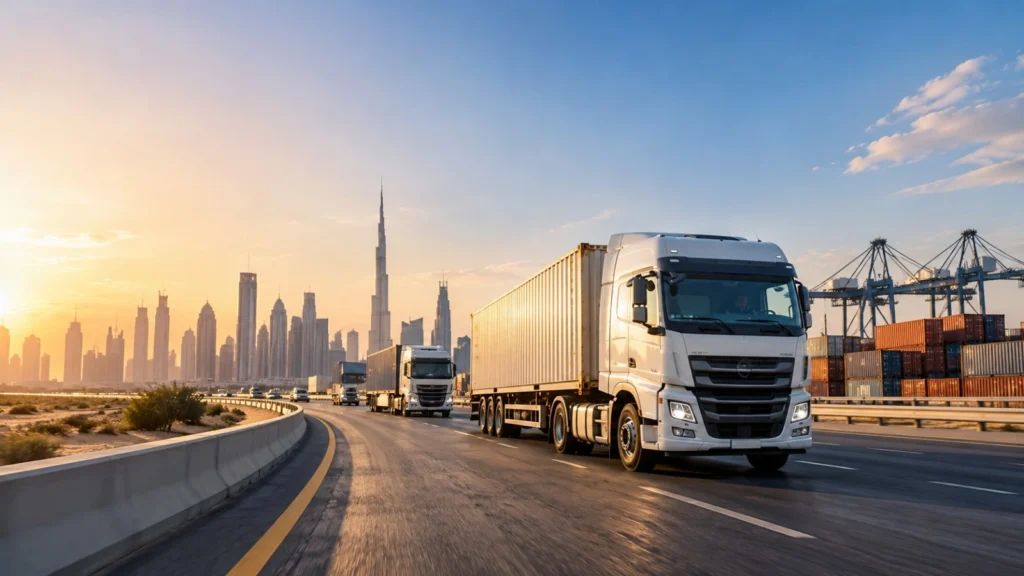
That is why choosing the right land freight service matters. Road transport connects Dubai’s ports, airports, warehouses, industrial areas, retail locations and customer destinations, making it an important part of the UAE’s wider supply chain. It also provides the road connection businesses need when moving cargo into Saudi Arabia, Oman, Qatar, Kuwait, Bahrain and other GCC markets.
For businesses managing regular shipments, working with an experienced Land transport company can make this process easier to coordinate. The right provider can bring together suitable vehicles, route planning, customs support, tracking and delivery management instead of treating transportation as a simple point-to-point service.
Why Land Freight Remains Important in the UAE
Dubai’s logistics network depends heavily on road transportation. Cargo arriving at a seaport or airport still needs to reach a warehouse, factory, store, construction site or final customer.
This is where land freight becomes particularly useful.
Road transportation can support:
- Retail and e-commerce distribution
- FMCG and food deliveries
- Manufacturing and industrial cargo
- Construction materials and equipment
- Healthcare and pharmaceutical shipments
- Project and oversized cargo
- Regular GCC distribution
Another advantage is flexibility. A business may need a dedicated truck for a large shipment one week and a shared-load solution for smaller cargo the next. Professional road freight operators can adapt the transport arrangement to the shipment rather than forcing every load into the same model.
Choosing the Right Type of Land Transport
There is no single road freight solution that works for every shipment. The right choice depends on cargo volume, dimensions, urgency, destination and handling requirements.
Full Truckload (FTL)
Full Truckload, or FTL, is generally suitable when a shipment needs a dedicated vehicle. It can work well for larger commercial loads, time-sensitive cargo or shipments where direct movement is preferred.
With fewer handling points, businesses may also have greater control over how the cargo is moved from pickup to delivery.
Less Than Truckload (LTL)
Not every shipment needs an entire truck.
LTL allows smaller consignments to share available vehicle capacity with other compatible cargo. For businesses shipping smaller volumes regularly, this can be a more practical way to manage transportation costs.
Temperature-Controlled Transport
Some cargo cannot simply be loaded onto a standard truck and sent on its way. Pharmaceuticals, healthcare products, food and other temperature-sensitive goods may require refrigerated or controlled-temperature vehicles.
Maintaining the required conditions throughout the journey is essential for protecting product quality.
Heavy and Project Cargo
Machinery, construction equipment, structural components, and other oversized loads require a different level of planning. Low-bed trailers, flatbeds, multi-axle equipment, route surveys and careful load distribution may all be necessary.
For this type of cargo, the vehicle is only one part of the job. Route feasibility and regulatory requirements need to be considered before dispatch.
Domestic UAE and GCC Road Freight
Land freight is not limited to movements between Dubai and other Emirates. Dubai also acts as a starting point for road connections across the GCC.
Regular road freight networks can support cargo movements into markets such as Saudi Arabia, Oman, Qatar, Kuwait and Bahrain.
Cross-border transportation, however, requires more preparation than a domestic delivery.
The shipment needs to be supported by the correct documentation, cargo classification, customs information, permits and any destination-specific certificates. For Saudi-bound cargo, for example, applicable SASO/SABER requirements need to be considered before the shipment reaches the border.
Getting these details right before dispatch can save considerable time later.
Customs Documentation Can Make or Break Delivery Schedules
A truck can be ready and the route can be clear, yet a shipment can still be delayed because one document is missing or contains incorrect information.
For this reason, customs preparation should be treated as part of the transportation plan-not as an afterthought.
Depending on the shipment and destination, the required documentation may include:
- Commercial invoice
- Detailed packing list
- Certificate of origin
- Correct HS classification
- Required permits and certificates
- Vehicle and transport documentation
- Destination-specific customs documents
GCC countries may have different documentation and inspection requirements. Even within the GCC Customs Union framework, physical inspections and country-specific procedures can still affect cross-border movements.
A knowledgeable logistics partner can help identify these requirements early and build realistic buffer time into the delivery schedule.
Technology Is Changing Road Transportation
Road freight is becoming increasingly connected.
GPS tracking and telematics give logistics teams better visibility of vehicles while they are on the road. Route optimisation tools can take traffic, delivery windows and changing road conditions into account. Predictive maintenance can also use vehicle data to identify potential problems before they turn into breakdowns.
Logistics operators are using data for demand forecasting, route planning and exception management, particularly when shipment volumes change during periods such as Ramadan, promotional campaigns or seasonal peaks.
For shippers, the benefit is not simply having more technology. It is having better information when decisions need to be made.
If a delivery is delayed, for example, real-time visibility allows the logistics team to respond instead of discovering the problem after the scheduled delivery time has passed.
Land Freight as Part of a Multimodal Supply Chain
Road freight does not always have to operate independently.
A shipment may arrive at Jebel Ali by sea, move by truck to a warehouse, and then continue by road to another GCC market. Similarly, road transport can provide the first-mile or last-mile connection for air and rail movements.
The UAE’s developing multimodal infrastructure is making these combinations increasingly relevant. Road vehicles provide the flexibility needed for shorter movements, while rail and other modes can handle suitable longer-distance segments.
For businesses, the benefit is greater flexibility when planning the complete supply chain.
How Businesses Can Improve Land Freight Efficiency
Good road freight planning starts before the truck arrives.
Cargo weight and dimensions should be confirmed in advance. Delivery deadlines need to be realistic. Customs responsibilities should be clearly assigned, and documentation should be checked before dispatch.
For regular routes, businesses can go a step further by reviewing delivery performance over time. Cost per shipment, on-time delivery, damage rates, waiting time and recurring border issues can reveal where changes are needed.
This kind of review can lead to better vehicle utilisation, improved consolidation, fewer avoidable delays and more predictable delivery schedules.
Conclusion
Reliable road transportation is a key part of how goods move across the UAE and the wider GCC. From everyday commercial deliveries to specialised project cargo, land freight services in Dubai give businesses a practical way to connect different parts of their supply chain.
But dependable land freight is about more than putting cargo on a truck. Vehicle selection, route planning, documentation, customs coordination, tracking and communication all contribute to a successful delivery.
For businesses searching for a Land transport company, the right logistics partner should be able to understand the shipment as a whole and provide a solution that fits its actual requirements.