Why Customs Clearance Services Matter for Every import and export business in dubai
A container reaches the port right on schedule. The truck is booked, the customer is waiting, and the production line downstream is already counting on that delivery. Then the cargo just… sits there. One missing document, one wrong HS Code, and a routine shipment turns into storage fees, missed deadlines, and a scramble to fix something that should never have gone wrong in the first place.
This scenario plays out more often than most businesses expect. Customs clearance isn’t just paperwork tacked onto the end of a shipment — it’s one of the make-or-break stages of international trade. Get it right and cargo keeps moving. Get one detail wrong and the whole supply chain can feel the ripple effect.
Dubai processes millions of shipments a year through hubs like Jebel Ali Port and Dubai International Airport, which makes it one of the busiest trade corridors on the planet. Importers and exporters here have to navigate detailed regulations, digital declaration platforms, and approvals that vary by product type. That complexity is exactly why so many businesses lean on an experienced Logistics Company in Dubai to keep their international trade operations compliant and running smoothly.
What Is Customs Clearance, Exactly?
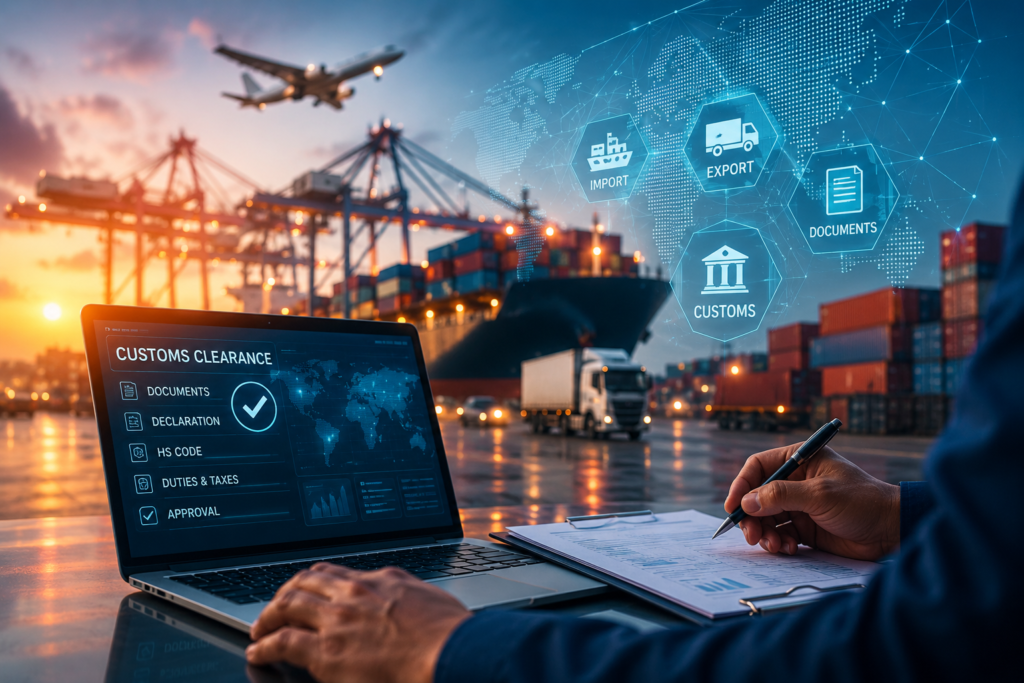
At its core, customs clearance is the approval process that lets goods legally cross a border — whether they’re coming in, going out, or simply passing through. Before any cargo is released, customs officials check the paperwork, confirm the correct product classification, work out the duties and taxes owed, and make sure everything lines up with local regulations.
That review usually covers documents such as:
Commercial Invoice
Packing List
Bill of Lading or Air Waybill
Certificate of Origin (where applicable)
Customs Declaration
Import permits and product-specific approvals
Correct HS Code classification
It can look simple on paper, but every shipment has to satisfy its own set of regulatory boxes. One incorrect entry — a wrong classification, a missing signature — is often enough to trigger an inspection, a delay, or a penalty.
Why This Matters More Than Ever
Dubai’s role as a global trade gateway has pushed its customs procedures to become increasingly precise and technology-driven. The systems in place today are built to move legitimate trade through quickly while still enforcing strict compliance standards.
Customs clearance no longer sits in its own silo — it’s tied directly to supply chain performance, inventory planning, tax obligations, and, ultimately, how satisfied customers are with delivery times. A hold-up at customs rarely affects just one shipment; it can push back production schedules, delay entire projects, and drive up logistics costs across the board.
Businesses that ship internationally on a regular basis tend to find that reliable customs clearance services are what keep operations predictable instead of reactive.
The Hidden Costs of Customs Delays
Freight charges are usually the first number businesses look at when budgeting for shipping. Customs delays, though, tend to generate costs that are much harder to see coming — and often harder to control.
These can include:
Demurrage charges for containers left inside the port past the free period
Detention fees when container returns are delayed
Port storage charges
Re-export costs for cargo that fails compliance checks
Penalties tied to incorrect declarations
Production delays caused by inventory that simply isn’t available yet
There’s also a cost that doesn’t show up on an invoice: strained customer relationships and a supply chain that starts to feel unreliable. Professional customs clearance in Dubai helps businesses stay ahead of these risks by getting documentation right before cargo ever leaves for the port.
Common Reasons Shipments Get Held Up
Most customs delays are avoidable. They tend to trace back to information that’s missing, inaccurate, or simply doesn’t match across documents.
Incorrect HS Code classification. The Harmonised System (HS) Code determines exactly how a product is treated for customs purposes. Get the code wrong, and duties can be miscalculated, or the shipment can get flagged for inspection.
Incomplete shipping documentation. A missing commercial invoice, an inaccurate packing list, or cargo descriptions that don’t quite match from one document to the next — any of these can stall processing.
Missing government approvals. Certain categories, including food products, pharmaceuticals, chemicals, cosmetics, and telecom equipment, need sign-off from the relevant UAE authorities before customs will release them.
Incorrect cargo valuation. If the declared value doesn’t match the supporting paperwork, expect additional verification or a reassessment.
Careful preparation before cargo even departs goes a long way toward avoiding these issues altogether.
Dubai’s Digital Customs Environment
The UAE has poured significant investment into digital customs infrastructure, and it shows. Clearance today is faster and considerably more transparent than it used to be, largely thanks to platforms like Dubai Trade and Mirsal 2, which have reshaped how declarations get submitted and processed.
Through these systems, businesses and their customs brokers can:
Submit declarations electronically
Track shipment status in real time
Handle customs payments
Manage import and export documentation
Get faster decisions thanks to automated risk assessment
This shift toward digital processing has made things quicker, but it’s also raised the bar — accurate, consistent documentation now matters more than ever, since automated systems are quick to flag anything that looks off.
Mainland vs. Free Zone: Knowing the Difference
Businesses operating in Dubai also need to understand that customs rules aren’t identical everywhere in the emirate. Mainland and Free Zone shipments follow different frameworks.
Goods entering the UAE Mainland are typically subject to customs duties and VAT, unless a specific exemption applies. Free Zones work differently — goods brought into a designated Free Zone can often benefit from duty suspension, provided they stay within the zone or are re-exported from there. Duties generally only kick in once those goods cross into the Mainland.
Knowing this distinction can make a real difference in how a business structures its supply chain and distribution strategy.
Why Businesses Turn to a Logistics Company in Dubai
Handling customs well takes more than filling out forms correctly. It means keeping up with regulations that shift over time, coordinating with multiple government authorities, and making sure every shipment satisfies both UAE and wider GCC trade requirements.
An experienced Logistics Company in Dubai takes that burden off a business’s plate — managing documentation, coordinating inspections, verifying product classifications, and keeping everything compliant from start to finish.
Instead of scrambling to fix problems after cargo has already arrived, businesses that plan ahead with the right partner tend to avoid most of those problems in the first place.
For companies moving goods in and out of the country regularly, that kind of proactive support translates directly into fewer disruptions and lower operational risk.
Technology Is Reshaping Customs Clearance
Customs processing keeps evolving alongside the broader logistics industry. Artificial intelligence, predictive analytics, automated document checks, and real-time shipment tracking are all helping authorities move cargo faster while still catching the shipments that genuinely need a closer look.
At the same time, more businesses are connecting customs data directly to their inventory systems, ERP platforms, and supply chain planning tools — which means procurement, finance, and logistics teams are working from the same picture instead of separate ones.
As trade becomes increasingly digital, customs compliance is turning into something bigger than paperwork. It’s becoming a genuine part of business strategy.
Practical Tips for Faster Customs Clearance
A few habits consistently separate businesses that clear customs smoothly from those that don’t:
Double-check HS Code classifications before goods ship out.
Keep shipping documents consistent across every piece of paperwork.
Line up required permits well before cargo arrives.
Make sure product descriptions accurately match what’s actually in the shipment.
Stay on top of changes to UAE customs regulations.
Work with customs professionals who know the local landscape well.
Small adjustments during shipment preparation can save businesses from far costlier problems once cargo lands at its destination.
Conclusion
Customs clearance rarely gets the attention it deserves — until something goes wrong. Accurate documentation, regulatory compliance, and thoughtful shipment planning are what keep goods moving efficiently across borders, and skipping any one of those steps tends to catch up with a business eventually.
As trade volumes keep climbing across the UAE and the broader GCC, businesses need customs processes built for speed, accuracy, and reliability. Partnering with an experienced Logistics Company in Dubai gives businesses the confidence to navigate these requirements, cut down on unnecessary delays, and keep import and export operations running smoothly.
In a trade environment this competitive, strong customs clearance services aren’t just about getting cargo through the gate — they’re about protecting supply chains, keeping costs under control, and safeguarding business continuity for the long run.