What Documents Are Required for Importing Goods into the UAE?
The UAE is one of the Middle East’s leading trade and logistics hubs, connecting international suppliers with businesses across the GCC, Asia, Europe and Africa. With major gateways such as Jebel Ali Port, Khalifa Port and Dubai International Airport, the country offers an established network for international cargo movement and distribution.
However, importing goods into the UAE involves more than arranging transportation and paying customs duties. Businesses must prepare the correct commercial documents, meet customs registration requirements and obtain relevant regulatory approvals before their shipments arrive.
For companies importing products regularly, understanding UAE import documentation requirements can help prevent clearance delays, unexpected expenses and disruptions to supply chain operations. Working with an experienced logistics company in Dubai can also make it easier to coordinate freight forwarding, customs procedures and cargo delivery.
Understand the Basic Requirements Before Importing
Before arranging an international shipment, businesses must ensure they are authorised to import the relevant products into the UAE.
Two important prerequisites are:
- Valid UAE Trade Licence: The business licence must include the appropriate commercial activity for the goods being imported. Companies should confirm that their licensed activities match their intended trading operations.
- Customs Importer Code: Businesses must register with the relevant emirate’s customs authority and obtain an importer code to submit customs declarations.
The registration process and documentation may vary depending on the emirate and the company’s mainland or free zone status.
Importers should also appoint an authorised customs representative or clearing agent where necessary. This representative can coordinate declarations, delivery orders and other clearance formalities through the applicable customs system.
Completing these requirements before the shipment leaves its origin can help avoid unnecessary delays when the cargo reaches the UAE.
Essential Documents Required for UAE Customs Clearance
Most commercial shipments entering the UAE require a standard set of shipping and commercial documents. Each document serves a specific purpose in verifying the shipment, identifying the goods and determining the applicable customs treatment.
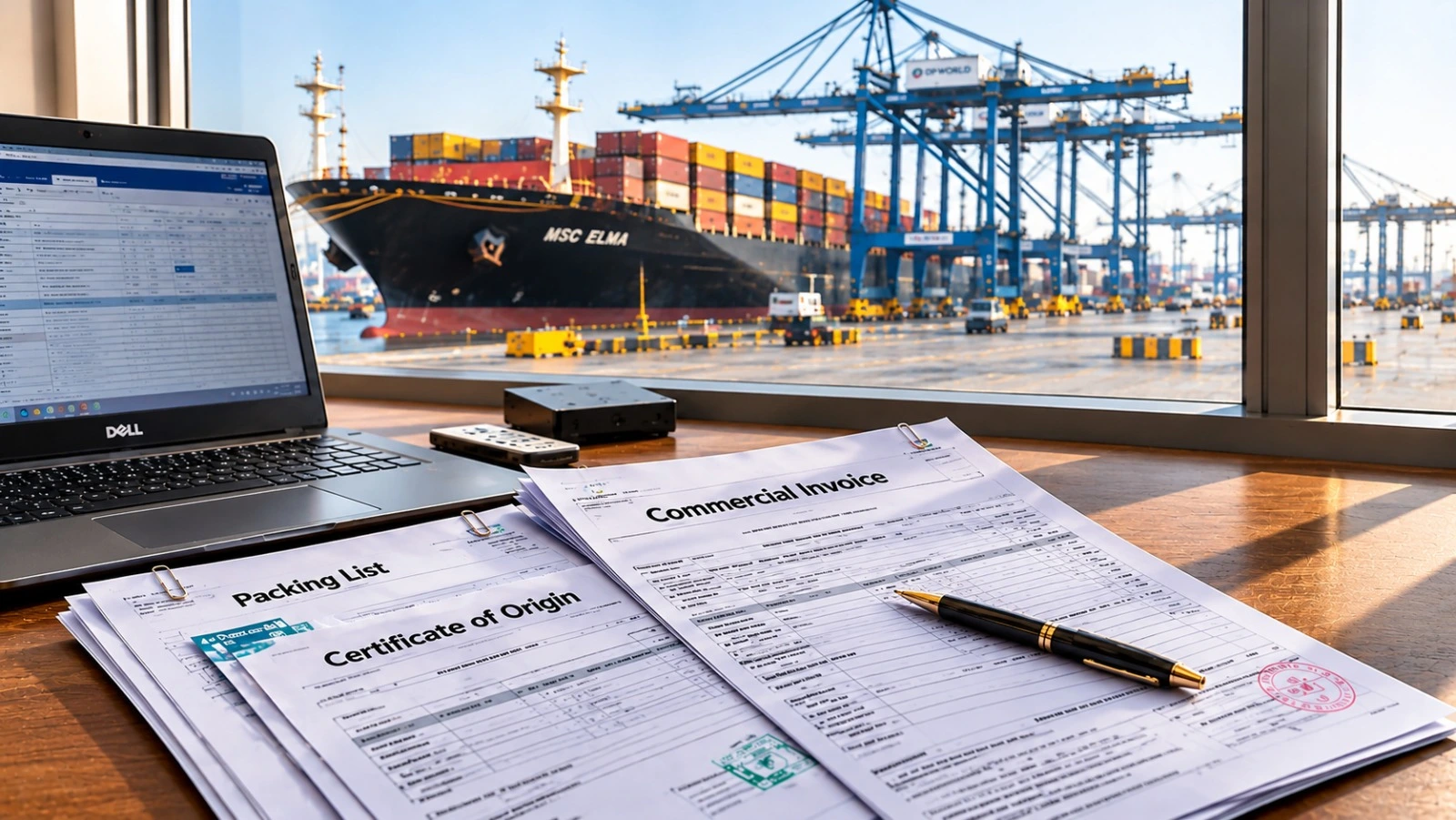
Commercial Invoice
The overseas seller prepares the commercial invoice with the UAE-based buyer listed as the recipient. It establishes the transaction value and provides customs authorities with essential shipment information.
It should generally include:
- Exporter and importer details
- Complete product descriptions
- Quantity and unit prices
- Total invoice value and currency
- HS codes, where applicable
- Country of origin
- Agreed Incoterms
Accurate descriptions are particularly important. General terms such as “spare parts” or “industrial products” may create classification questions. Specific product descriptions help customs authorities determine the appropriate HS code and applicable customs duty.
Packing List
The packing list provides a detailed breakdown of the cargo. It generally includes the number of packages, product quantities, gross and net weight, dimensions and packaging details.
The information should match the commercial invoice and the actual shipment. Differences in quantities, package counts or weights can result in additional verification and inspection.
Certificate of Origin
A Certificate of Origin (COO) identifies the country where the goods were manufactured or produced. It is generally issued or authenticated by an authorised organisation in the exporting country.
This document is important for determining the applicable customs treatment, particularly when preferential trade agreements are involved.
For example, eligible Indian-origin goods may benefit from preferential treatment under the UAE–India Comprehensive Economic Partnership Agreement (CEPA). However, the shipment must meet the agreement’s rules of origin and documentary requirements. A standard certificate alone does not automatically qualify goods for reduced customs duty.
Bill of Lading or Air Waybill
These documents provide evidence of the contract of carriage and contain important shipment details.
- Bill of Lading (B/L): Used for sea freight shipments.
- Air Waybill (AWB): Used for air freight shipments.
They identify the shipper, consignee, carrier and cargo details. Depending on the shipment and carrier procedures, an original document or express release may be required.
Delivery Order and Customs Import Declaration
A delivery order is issued by the shipping line or airline’s local agent, allowing the consignee or authorised representative to arrange cargo release.
The customs import declaration, commonly called the bill of entry, is submitted electronically through the relevant customs system. It records the shipment’s classification, declared value, origin and applicable customs treatment.
Additional documents, such as import permits or exemption certificates, may also be required depending on the goods and customs procedure.
Additional Permits for Restricted and Regulated Goods
Not every product can enter the UAE using standard shipping documents alone. Certain categories require prior registration, product approval or shipment-specific permits from the relevant authorities.
Examples include:
- Food and beverages: Health certificates from the competent authority in the exporting country, product registration and applicable food safety approvals. Meat and poultry products also require appropriate Halal slaughter certification.
- Pharmaceuticals and medical devices: Registration and approvals from the relevant UAE health authorities.
- Cosmetics and consumer products: Applicable product registration and municipal approvals, depending on the product category and emirate.
- Telecommunications equipment: Relevant approvals for regulated radio and telecommunications products.
- Plants, animals and agricultural products: Permits and phytosanitary or veterinary documentation from the competent authorities.
- Hazardous materials: Safety Data Sheets (SDS), product-specific approvals and other technical documentation where applicable.
Food importers should pay particular attention to product registration and shipment-level requirements before dispatch. In Dubai, relevant consumer product registration procedures may also apply through municipal systems.
A common mistake is arranging transportation before confirming these approvals. If a shipment arrives without the necessary documentation, it may be held for inspection or regulatory clearance. The resulting storage, demurrage and handling charges can increase the overall import cost.
For this reason, businesses should identify the applicable permits before confirming the shipping schedule.
Customs Duties, Valuation and Free Zone Considerations
Import documentation also affects the financial side of international trade.
The UAE generally applies a standard customs duty of 5% to many imported goods, although rates and exemptions vary according to product classification, origin and applicable trade agreements. Import VAT is generally 5% on taxable imports, subject to the relevant VAT rules.
Customs valuation is another important consideration. Businesses should ensure that the declared value accurately reflects the transaction and applicable valuation rules, including relevant freight and insurance costs.
Free zone imports require additional attention. Goods entering a UAE free zone may benefit from customs duty suspension while they remain within the zone, subject to applicable conditions. However, moving those goods into the UAE mainland generally requires a separate customs declaration and payment of applicable duties and taxes.
Businesses using facilities such as Jebel Ali Free Zone (JAFZA) and Khalifa Industrial Zone Abu Dhabi (KIZAD) should establish the intended movement of goods before selecting their customs procedure.
For importers sourcing products from different countries, checking preferential trade agreements and rules of origin can also help identify potential duty savings. Proper documentation is essential to support any preferential tariff claim.
Digital Customs and E-Invoicing: What Importers Should Prepare For
The UAE continues to invest in digital trade infrastructure, making accurate shipment information increasingly important.
Dubai Customs uses Mirsal 2 to support electronic customs declarations and clearance procedures. Abu Dhabi’s Advanced Trade and Logistics Platform (ATLP) provides a digital channel connecting trade-related services and stakeholders.
Electronic invoicing is being implemented across the UAE through a structured, phased approach. The pilot began on 1 July 2026, with mandatory implementation scheduled in stages. Smaller businesses have later deadlines, subject to the applicable rules.
E-invoicing does not replace customs documentation. However, better alignment between supplier invoices, accounting records and customs declarations can help businesses maintain consistent transaction data and reduce discrepancies.
Importers should review their invoicing systems, product descriptions, HS codes and supplier information as part of their wider compliance preparation. Maintaining accurate digital records can also make it easier to respond to document requests and post-clearance checks.
Common Import Documentation Mistakes That Cause Delays
Even when all the main documents are available, small inconsistencies can interrupt the clearance process.
Some common problems include:
- Incorrect or incomplete HS codes
- Differences between invoice and packing list quantities
- Missing or inconsistent country-of-origin information
- Incorrect consignee details
- Missing regulatory permits
- Inaccurate customs valuation
- Delayed delivery orders or original transport documents
A practical way to avoid these issues is to conduct a document review before cargo dispatch. Confirm that product descriptions, quantities, weights, consignee details and declared values are consistent across all documents.
Businesses should also account for port free time, inspection requirements and possible storage charges when planning shipment schedules. For shipments moving by sea, air or road, coordinating document availability with the transport schedule is equally important.
Conclusion
Importing goods into the UAE requires careful preparation, from obtaining the correct trade licence and importer code to arranging commercial invoices, packing lists, certificates of origin and transport documents. Regulated products may require additional approvals, while free zone movements and preferential trade agreements introduce further documentation considerations.
As UAE trade processes become increasingly digital, maintaining accurate shipment information and coordinating documentation before dispatch are essential for reducing avoidable delays and controlling import costs.
Working with an experienced logistics company in Dubai can help businesses coordinate import documentation, customs clearance and cargo transportation more efficiently. From freight forwarding and sea or air freight to land transportation and warehousing, the right logistics support helps simplify import operations, minimise avoidable delays and keep goods moving across the UAE and beyond.