Supply Chain Diversification in 2026: Building More Flexible Logistics for UAE Businesses
Supply chains have always evolved, but the pace of change over the last few years has been remarkable. Businesses are dealing with changing trade routes, fluctuating freight costs, supplier shortages, and increasing customer expectations—all at the same time. In this environment, depending on a single supplier or one transportation route can quickly become a business risk.
For companies operating in the UAE, flexibility is becoming just as important as efficiency. The country continues to strengthen its position as a global trade hub, connecting markets across Asia, Europe, and Africa. To keep up with this growth, many organisations are rethinking how they source products, move cargo, and manage inventory.
Rather than building supply chains around one fixed plan, businesses are creating networks that can adapt when conditions change. Working with an experienced logistics company in Dubai also plays an important role by helping businesses access multiple transport options, improve visibility, and maintain smoother cargo movement across local and international markets.
Why Supply Chain Diversification Matters in 2026
Not long ago, many businesses focused mainly on reducing logistics costs. Today, reliability has become just as valuable.
Supply chains can face disruptions at any stage, impacting operations, delivery schedules, and overall efficiency. Shipping schedules may change, certain trade routes may become less efficient, or suppliers may struggle to meet demand. When operations depend on only one source, even a small disruption can delay deliveries and increase overall costs.
Diversification helps reduce this risk by giving businesses practical alternatives. Instead of relying on one supplier, one warehouse, or one transport method, companies spread operations across multiple options. If one part of the supply chain slows down, another can help keep products moving.
This approach has become an important part of modern supply chain management, allowing businesses to respond more confidently to changing market conditions while maintaining customer satisfaction.
Four Practical Ways to Build a More Flexible Supply Chain
1. Diversify Suppliers
Relying on a single supplier may simplify purchasing, but it also creates unnecessary risk.
Many UAE businesses now work with suppliers in different regions rather than depending on one country or manufacturer. This provides greater flexibility if production delays, transportation issues, or trade restrictions affect one location.
Supplier diversification is not about replacing trusted partners. It is about creating reliable backup options before they become necessary.
2. Combine Different Transportation Modes
No single transport method is suitable for every shipment.
Sea freight remains the most economical option for large international cargo, while air freight is ideal for urgent deliveries. Road transportation completes the journey by connecting ports, airports, warehouses, and customers throughout the UAE and the wider GCC.
Businesses that combine these transport methods can adapt more easily when schedules change or capacity becomes limited.
A reliable logistics company in Dubai helps coordinate these multimodal operations, allowing shipments to move efficiently between different transportation networks without unnecessary delays.
3. Improve Supply Chain Visibility
Businesses make better decisions when they have accurate information.
Modern logistics platforms provide real-time shipment tracking, inventory updates, and transportation insights that help identify potential delays before they become larger problems.
Instead of reacting after disruptions occur, companies can adjust delivery schedules, reroute cargo, or communicate with customers much earlier.
Greater visibility also improves planning, reduces uncertainty, and supports better day-to-day operational decisions.
4. Keep Inventory Where It Matters Most
Holding excessive inventory increases costs, but keeping too little stock can create delivery problems when supply chains are disrupted.
Many businesses now maintain strategic inventory for products that are essential or have longer lead times. Distributing inventory across multiple warehouse locations also helps reduce delivery times while improving business continuity.
Rather than focusing only on efficiency, companies are balancing inventory levels with resilience to support long-term operations.
Technology Is Strengthening Modern Supply Chains
Diversification works best when businesses have clear visibility across their operations. Today, technology is helping companies make faster and more informed logistics decisions.
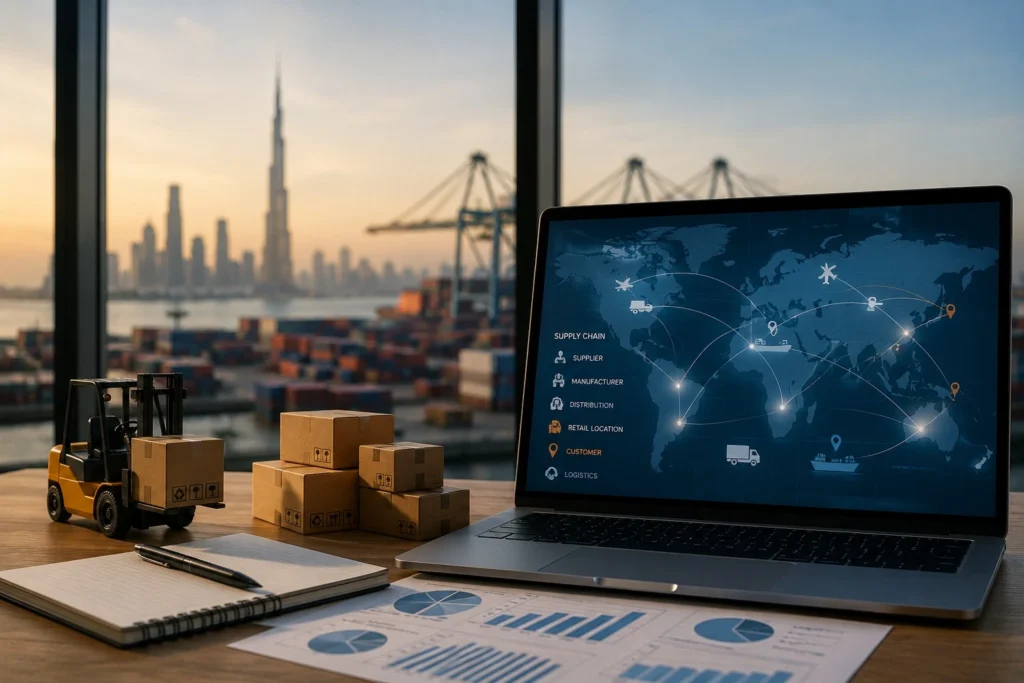
Real-time shipment tracking, cloud-based logistics platforms, AI-powered forecasting, and transportation management systems (TMS) allow businesses to monitor cargo from dispatch to delivery. Instead of discovering delays after they happen, operations teams can identify potential issues early and adjust routes, schedules, or inventory plans before they affect customers.
Many businesses are also connecting their logistics systems with ERP and warehouse management platforms. This creates a single view of inventory, transportation, and order fulfillment, making planning more accurate and reducing manual processes.
For any logistics company in Dubai, technology has become an essential part of delivering dependable service. Customers increasingly expect shipment visibility, proactive communication, and accurate delivery timelines rather than simple transportation.
Why the UAE Is Well Positioned for Supply Chain Diversification
The UAE has developed one of the most connected logistics networks in the region. Its strategic location, modern ports, international airports, free zones, and extensive road infrastructure allow businesses to access global markets efficiently while serving customers across the GCC.
At the same time, the country’s continued investment in trade agreements, logistics infrastructure, and digital customs processes has created an environment where businesses can diversify their supply chains more confidently.
Instead of depending on one supplier or one shipping corridor, companies operating in the UAE can source from multiple international markets, use different transportation methods, and distribute products through regional logistics hubs. This flexibility not only reduces operational risk but also supports faster response times when market conditions change.
Common Mistakes Businesses Should Avoid
Diversification is about making better decisions—not making operations more complicated.
Some businesses expand supplier networks without checking quality standards, while others increase inventory without considering storage costs. In both cases, unnecessary complexity can reduce efficiency instead of improving resilience.
Some common mistakes include:
- Depending on backup suppliers that haven’t been properly evaluated.
- Choosing transport routes based only on cost rather than reliability.
- Holding more inventory than necessary.
- Overlooking digital visibility across the supply chain.
- Waiting until a disruption occurs before creating contingency plans.
A balanced approach helps businesses remain flexible while maintaining operational efficiency.
Practical Steps to Build a More Resilient Supply Chain
Businesses don’t need to redesign their entire supply chain overnight. Small improvements made consistently often deliver the biggest long-term benefits.
A practical starting point includes:
- Review supplier dependencies and identify high-risk areas.
- Build relationships with suppliers in different regions.
- Combine sea, air, and road freight where appropriate.
- Keep safety stock for products with longer lead times.
- Invest in shipment tracking and supply chain visibility.
- Regularly review transportation performance and delivery data.
- Work with a trusted logistics company in Dubai that understands regional trade routes, customs procedures, and multimodal freight solutions.
These steps help businesses become more adaptable without adding unnecessary complexity to day-to-day operations.
Conclusion
Supply chain diversification has become an important business strategy rather than simply a response to unexpected disruptions. Companies that build flexibility into their sourcing, transportation, and inventory planning are better prepared to manage uncertainty while maintaining reliable service.
For businesses in the UAE, the opportunities are significant. Strong infrastructure, international connectivity, and continued investment in logistics make it easier to develop supply chains that are both efficient and resilient. Combined with modern supply chain management practices and the right technology, businesses can respond faster to market changes and improve long-term operational performance.
Partnering with an experienced logistics company in Dubai can further strengthen these efforts by providing reliable freight solutions, multimodal transportation, customs expertise, and greater supply chain visibility. As global trade continues to evolve, businesses that invest in flexible logistics today will be better positioned to grow, compete, and serve customers with confidence tomorrow.