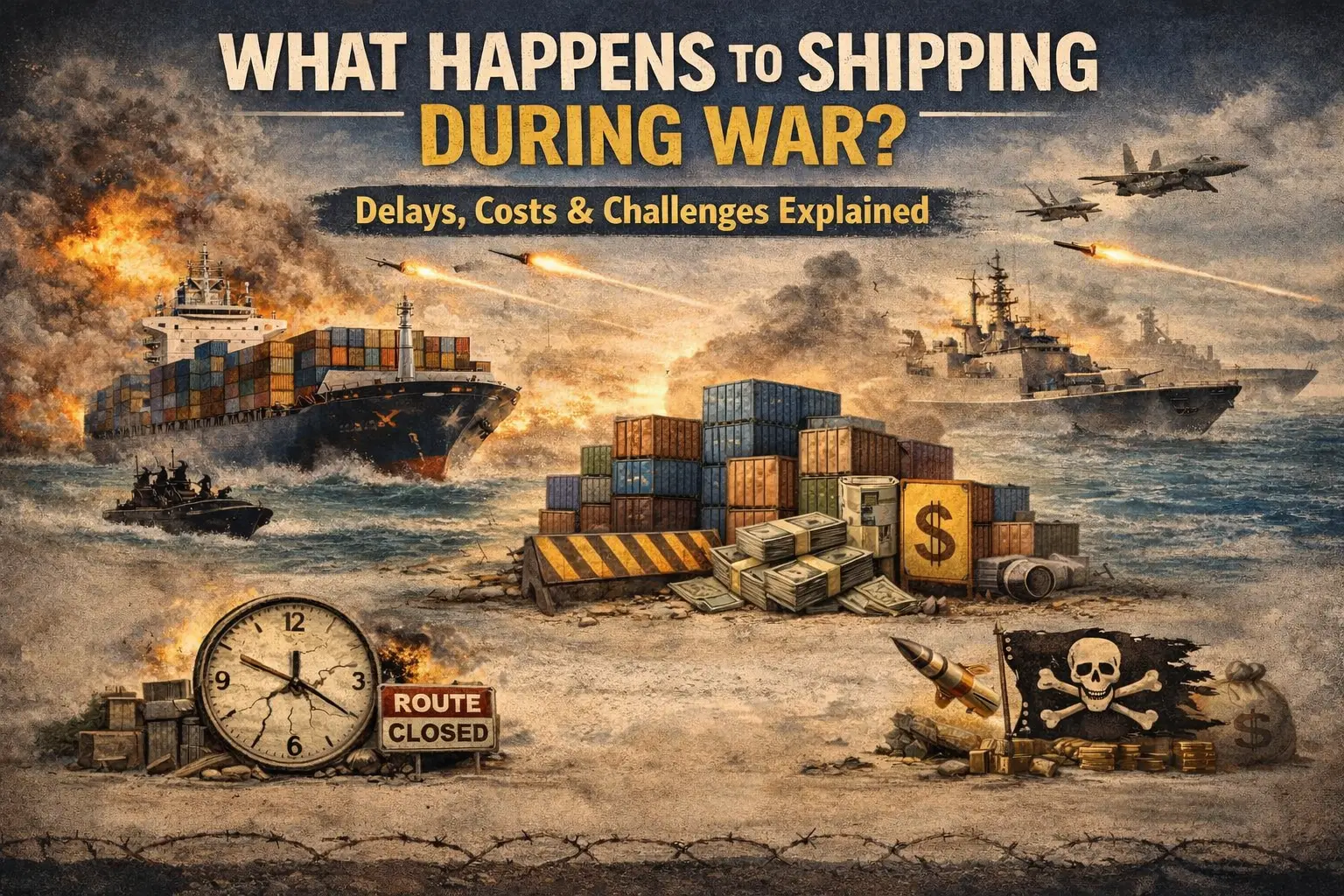
When a conflict breaks out, the impact is rarely limited to borders. One of the first industries to feel the pressure is global shipping. Trade routes, supply chains, and delivery timelines all begin to shift—sometimes within days.
In 2026, rising tensions involving the U.S., Iran, and Israel have once again shown how war affects international shipping, especially across the Middle East. For businesses connected to global trade, the effects are immediate—longer transit times, rising costs, and increasing uncertainty.
Understanding what actually changes during such situations helps businesses respond better instead of reacting late.
Shipping Routes Don’t Stay the Same
The first visible change during any conflict is the movement of vessels.
Key maritime routes such as the Strait of Hormuz and the Red Sea become high-risk zones. Shipping lines begin to avoid these areas to protect cargo, crew, and vessels. As a result, routes are quickly adjusted.
Instead of direct paths, vessels are often diverted around longer routes, including the southern tip of Africa. This can add 10 to 14 days to transit times and significantly increase the total distance travelled.
The effect is simple:
- Longer journeys
- Slower deliveries
- Increased pressure on alternative routes
And when multiple vessels are rerouted at the same time, congestion builds up at other ports—one of the most common patterns seen in the war impact on shipping routes.
Delays Become the New Normal
A single factor does not cause shipping delays during war. They build up across multiple stages.
- Rerouted vessels take longer
- Ports handling diverted cargo become overcrowded
- Customs clearance slows down due to increased inspections
In many cases, shipments that were expected to arrive in a fixed timeframe begin to move unpredictably.
For businesses in the UAE and across the Middle East, this creates a chain reaction. Inventory planning becomes difficult, delivery commitments get affected, and supply gaps start appearing.
This is where the reality of how war affects international shipping timelines becomes clear—delays are no longer occasional, but expected.
Costs Rise Faster Than Expected
One of the most immediate impacts of conflict is the rise in shipping costs.
This is not just about fuel. Several cost layers increase at the same time:
War Risk Insurance
Insurance premiums rise sharply when vessels enter conflict zones. What was once a minor cost can increase multiple times for a single journey.
Longer Routes = Higher Fuel Use
Rerouting vessels over longer distances leads to higher fuel consumption, which directly increases freight costs.
Freight Rate Surges
With fewer vessels completing fewer trips, overall capacity drops. This often pushes freight rates higher, sometimes doubling or more, depending on demand.
In practical terms, businesses end up paying more for slower delivery—a typical outcome during global shipping disruptions.
Operational Challenges Increase
Beyond delays and costs, war introduces operational risks that are harder to predict.
- Some ports may reduce operations or temporarily close
- Security threats such as drone attacks or maritime risks increase
- Governments may introduce new trade restrictions or compliance checks
Even when shipments are moving, the level of uncertainty is higher than usual.
In some situations, carriers may even stop accepting bookings for certain regions to stabilise existing operations. These disruptions reflect the broader challenges seen in the global logistics network during conflict periods.
What This Means for the UAE and Middle East
The UAE plays a central role in global logistics, connecting Asia, Europe, and Africa. When disruptions affect nearby trade routes, the region does not stop—but it adapts.
Shift in Entry Points
Ports outside high-risk zones, such as Fujairah and Khor Fakkan, become more important. Cargo may be routed there and then moved inland toward major hubs like Jebel Ali.
Land-Based Movement Increases
With sea routes affected, road and rail networks start carrying more of the load. The UAE’s infrastructure allows cargo to move between ports and cities with relatively less disruption.
Sea-to-Air Solutions
For time-sensitive cargo, businesses begin shifting from sea freight to air freight. While more expensive, it helps maintain delivery timelines when maritime routes are unstable.
Inventory Strategy Changes
Instead of relying on just-in-time delivery, companies begin holding more stock locally. This reduces dependency on unpredictable shipping timelines.
The region’s ability to adapt highlights how logistics systems evolve when facing sustained disruptions.
A Common Pattern in Any War Situation
While every conflict is different, the logistics pattern is often similar:
- Routes become restricted or risky
- Ships are rerouted
- Transit times increase
- Costs rise across multiple levels
- Capacity becomes limited
- Delays spread across the supply chain
This cycle can begin within days and continue as long as instability remains.
How Businesses Can Respond
While the situation cannot be controlled, the response can be managed.
Plan for Flexibility
Relying on a single route or method increases risk. Alternative routes and transport options should always be considered.
Allow Buffer Time
Tight delivery timelines become difficult to maintain. Adding buffer time helps reduce pressure.
Review Cost Structures
Freight, insurance, and handling costs may change quickly. Regular cost evaluation helps avoid unexpected losses.
Stay Updated
Shipping conditions during conflict change rapidly. Real-time updates help in making quicker decisions.
Work with Structured Logistics Support
Coordinating freight, documentation, and delivery during disruptions requires more control. A structured logistics setup helps manage these changes more effectively.
Final Thoughts
War does not stop global trade—but it changes how it moves.
Shipping becomes slower, more expensive, and less predictable. Routes shift, costs rise, and delays become harder to avoid. For businesses, the challenge is not just moving goods, but adjusting to changing conditions without disrupting operations.
For regions like the UAE, the focus shifts toward resilience—finding alternative routes, using infrastructure efficiently, and maintaining continuity even during uncertain times, often with the support of experienced logistics companies in UAE that can navigate these disruptions effectively.
Because in situations like these, logistics is no longer just about delivery—
it becomes about adaptability.